“Justice shall be mixed with mercy. You shall not always be an Ass.” -C.S. Lewis, The Horse and His Boy 1954
Upon capture for his crimes against Narnia, Rabadash was brought in chains to the Kings and Queens of Narnia for judgment. His fate no doubt was deserved, for traitors deserve death. And yet Queen Lucy and King Edmund, in the wisdom that could only be gained through an encounter with Aslan, proposed mercy instead of vengeance. Rabadash in his pride could not hear the mercy being offered by Queens and Kings of honor, for his shame from being caught was too grand and his heart too callous. The warning was not heeded, Aslan himself came to judge and enact justice. A justice that only revealed what was already there, turning a king into an ass, for he already had dishonored himself to the point of folly.
And yet, even in Aslan’s judgment, he remained as merciful as he was just and as kind as he was stern. The king need not remain a donkey all the days of his life, but he would not be allowed to venture off into boundless foolishness as he had before. Aslan’s magic would revert Rabadash to his human form if he stayed within the bounds he should.
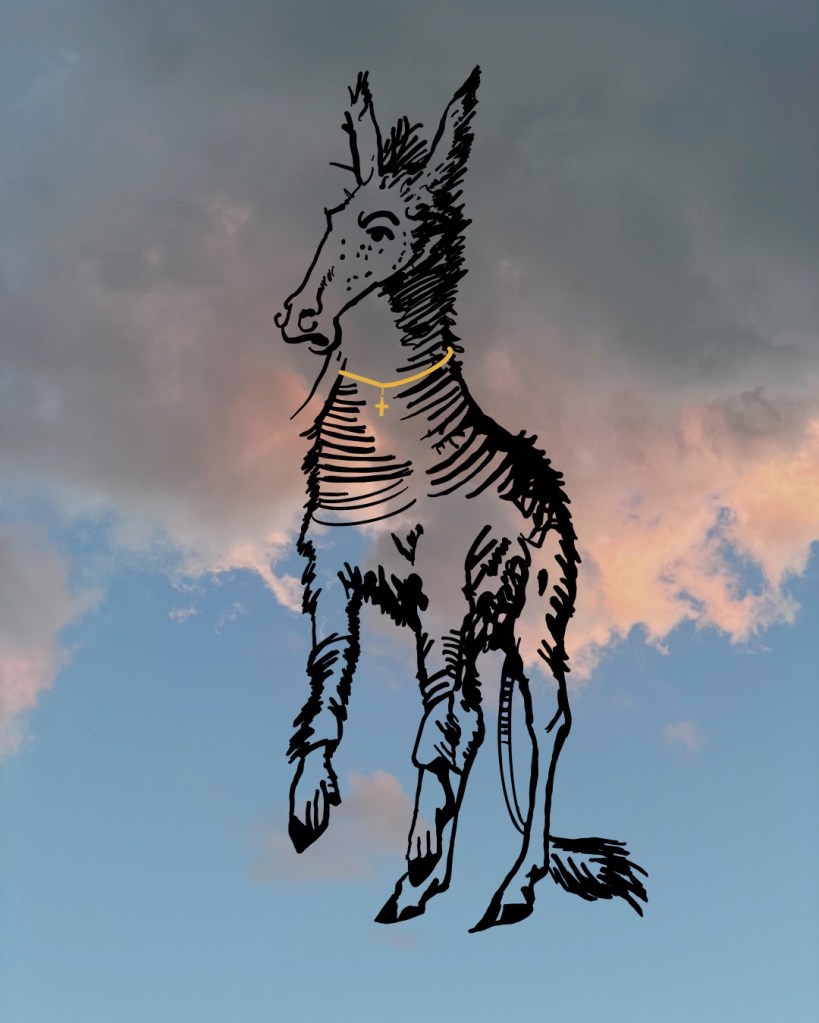
What a fickle thing it is, to find ourselves the likes of Rabadash in our own stories. Our own desperation leads us to conquer rather than receive. Our pride blinds us to the feast of grace and mercy before us, illuminating only our shame and fear which ushers us into further destruction. We are no less wicked than a king refusing to hear mercy, no less foolish than a man who has made an ass of himself.
From the dawn of our history, we have made a mockery of the unity we share in Christ. The Church has bickered and grown cold with one another. Saint Paul and Saint Barnabas led the way of the Church in unsightly disagreements leading to broken relationships. The Great Schism and the Reformation led to our current state – the most divided Church in all of history. And still today, our denominations are splitting one after another. Methodists, Baptists, Anglicans, Lutherans. We seem to only see the things which separate us, and forget the things which unite us.
Our sins go further than denominational divides. We are abusers and liars. We seek control and comfort. Our pride leads us to believe we can accomplish peace without love. We fail to be honest and fail to be kind. The wounds of our messiness become irreparable and turn our laughter into tears. Brothers are separated, and friendships are forced to die.
And yet, justice mixes with mercy. We are destined perhaps to transform into the very things we mock but by God’s grace, we are not left to be a beast forever.
It is perhaps justice, that the church remains in pain from our division. We have become so prideful as to preclude others from sharing in the Lord’s table. We have forced one another into becoming the enemy. Each side in turn is the schismatic brethren, neither is without faults. And therefore we each claim the Lord is on our side, that he is in, or present with our eucharist. We are revilers of our family, spitting curses and screaming heresy without remorse. We fail to see the need for each other, and we grow colder because of it. In attempts to claim one virtue more valuable than another, we lose our righteousness altogether. We have truly made fools of ourselves, transforming into asses in the process.
Yet this justice mixes with mercy. We shall not always be an ass. Mercy trickles through our divisions like light through stained glass windows. God’s graces are demonstrated through the outstretched arms of brotherhood. Through shared prayers and repeated confessions. Mercy is felt through the waters of baptism, which extend beyond any denominational split or imprudent words. The trickle of holy water on foreheads reminds us all, we are born of the same womb. The sign of the cross marks us siblings of high importance. Mercy is seen even in our donkey state, in the blessings we offer each other instead of blood and body. Our arms are crossed in stubbornness, while our spirits crave the prayers of the righteous.
As Rabadash upon his purification was bound to his town, we are perhaps bound to our tribes. On good days we are called Rabadash the peacemaker, but everyone knows we are truly Rabadash the Ridiculous, for the mockery of our disunity can not be forgotten by the world.
Justice mixes with mercy, and we remember our hope is not in this life but in the one to come. The eschaton that will bring ultimate unity, wash away all senseless disagreements, and heal all our wounds. Holy waters remind us that the kingdom is already and not yet. As priests splash our feeble bodies, we are united, awaiting the days when we can swim in the waters that only splash our skin.
 Undignified